
The Most Audacious Art Collection in a Restaurant
(And That’s Saying Something)
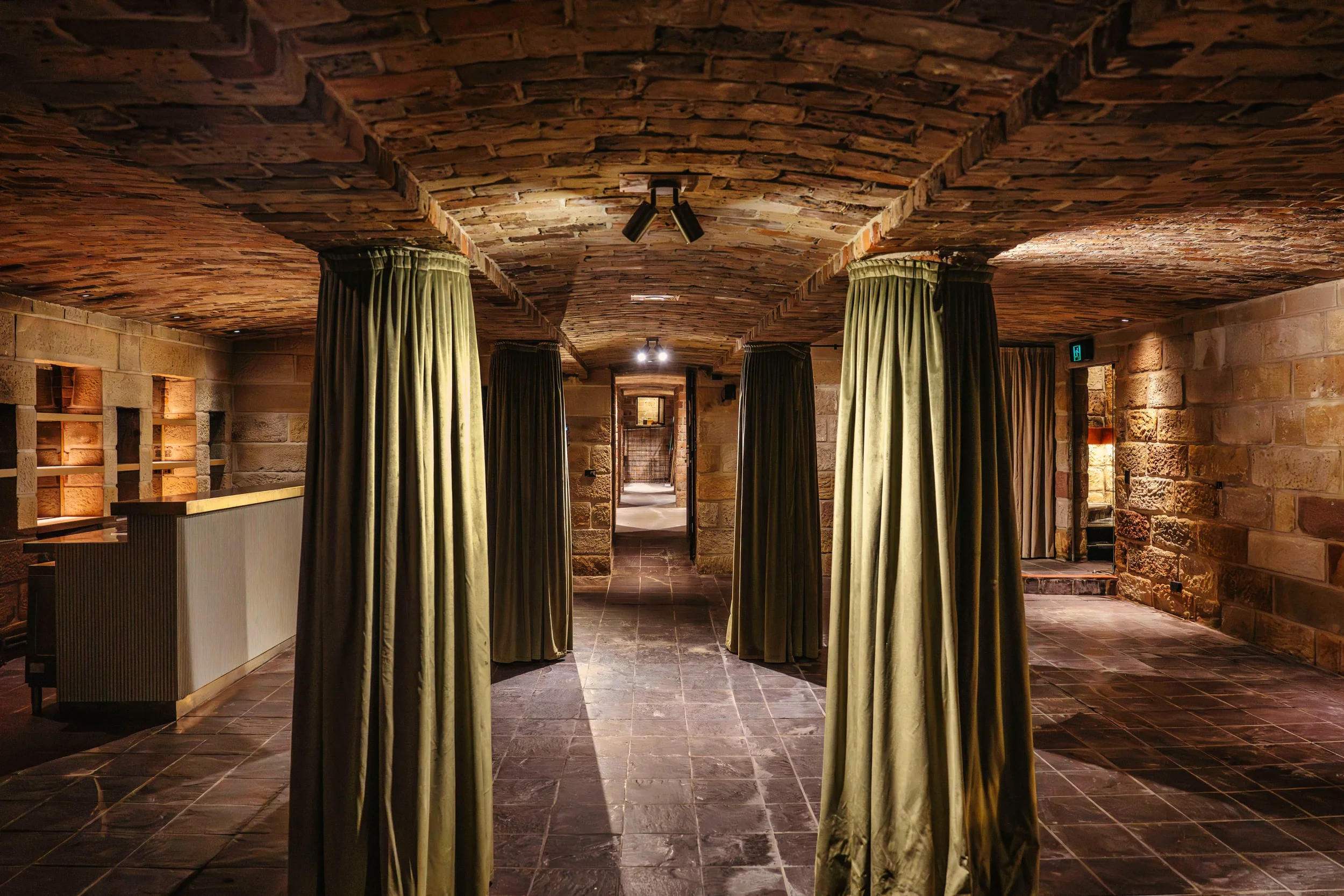
There’s silk on the walls at Darling Glebe. Signed Hermès carrés by the elusive Henri de Linares. Each one older than your last anniversary and twice as bold.
But they’re not here to match the room. They’re here to hold court. Fleurs et Gibiers greets you in geraniums and gunmetal. Gibiers watches over dinner. Belle Chasse twirls in the Martini Lounge. Fructidor ripens in the wine cellar like it knows your secrets.
And that’s just the beginning.
Every plate is a century old. Every decanter has a past. Even the waiters wear vintage Hermès bow ties chosen by lucky dip.
This isn’t just styling. It’s quiet luxury with a story, told in silk, crystal and a little mischief.

Framed in silk.
|
Worn in service.
|
Whispered across the sandstone.
|
Framed in silk. | Worn in service. | Whispered across the sandstone. |
mischievous flair
The Art
Framed in silk. Worn in service. Whispered across the sandstone.
At Darling Glebe, the art doesn’t just hang on the walls. It walks the floor, ties the bow ties and pours the martinis. It came together the way most good stories do: accidentally, then all at once.
We’ve framed four original Hermès carrés silk scarves, designed between 1962 and 1980 by Henri de Linares. An artist with a flair for still life, seasonal drama and birds that look like they could hold a grudge.
There was no grand plan. It started with a pheasant. Then a pear. Then a hare in full silk drag. Each piece was sourced individually, chosen on impulse and signed with Henri’s mischievous flair. The kind of thing you hang on a wall and suddenly your whole venue looks smarter than you are.
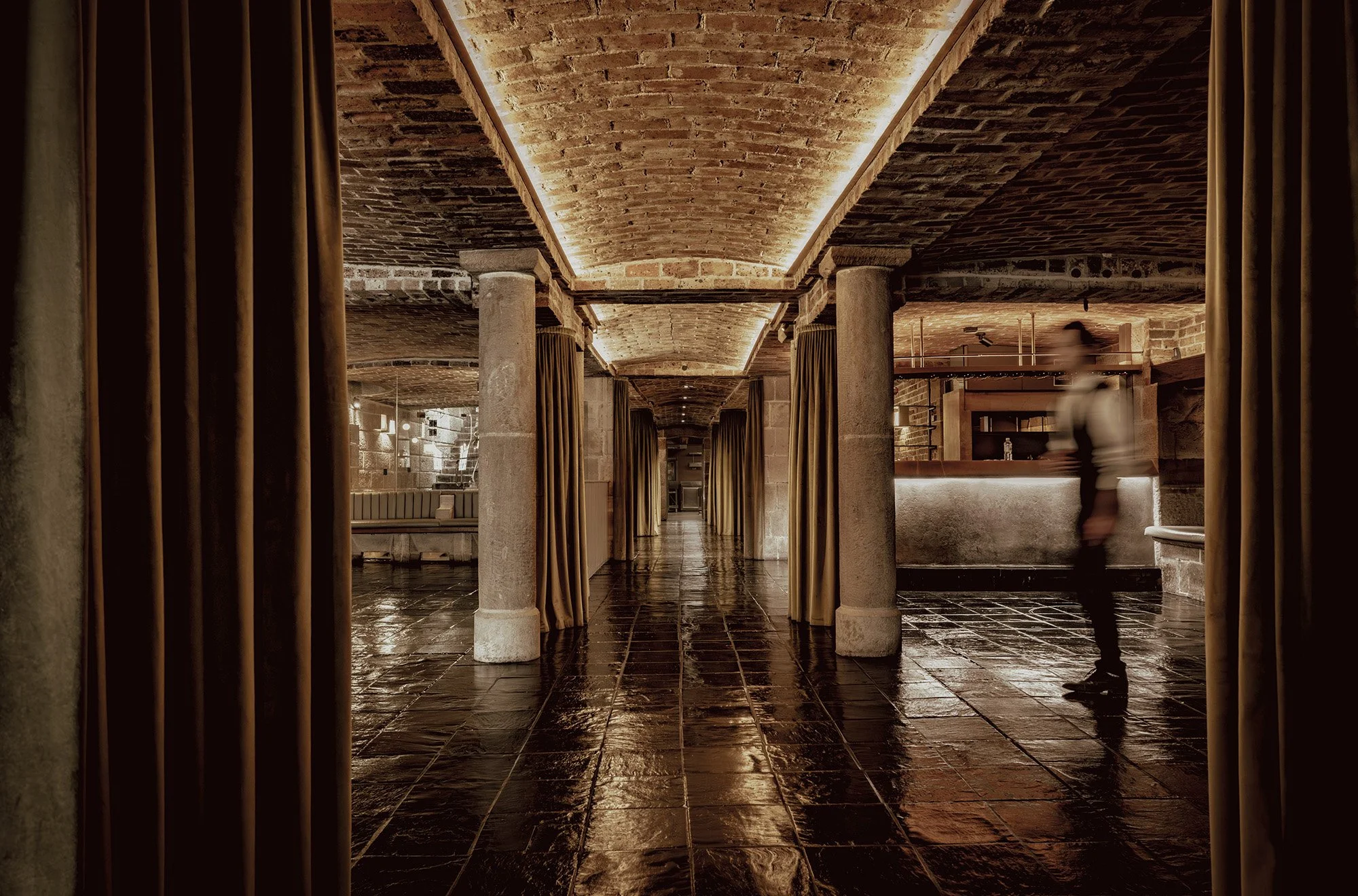
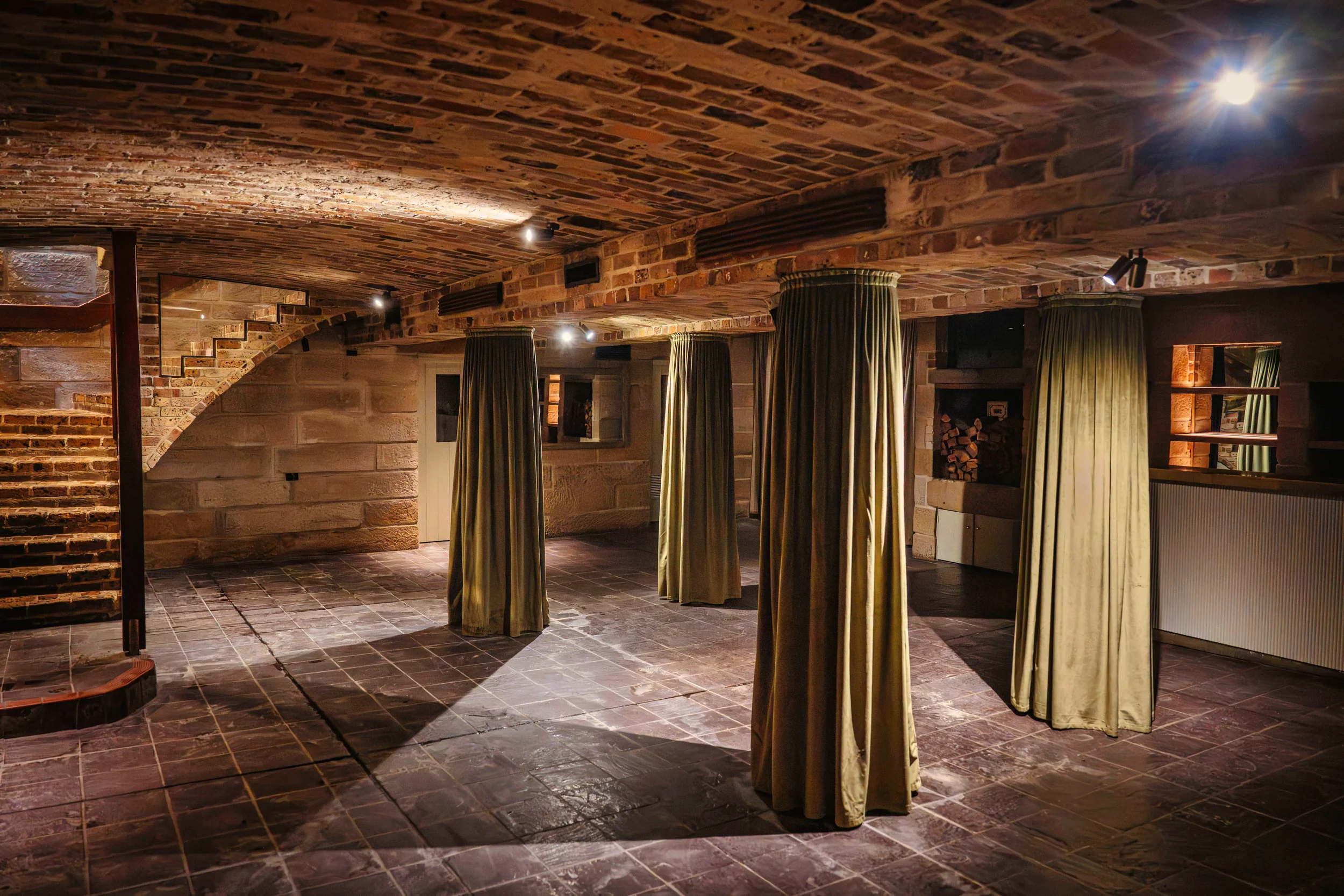
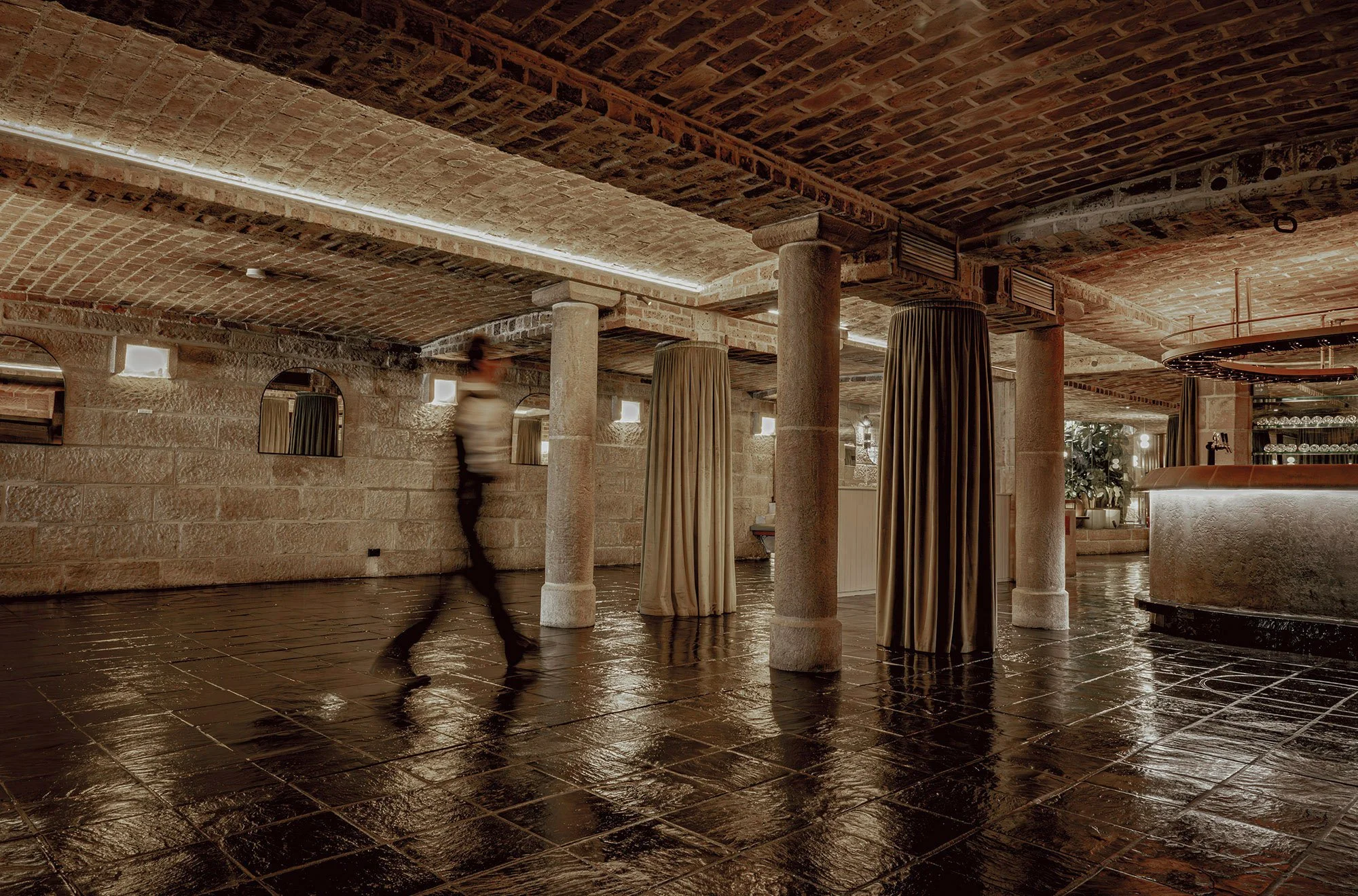
They now live here. Framed in deep champagne-bronze and oak float frames, set under museum glass, mounted on convict-chipped sandstone. They don’t shout. They watch.
In a playful tribute to the riot on the walls, our team wears vintage Hermès Papillon bow ties. No two are alike. Each night begins with a lucky dip: the venue manager assigns ties like a silk tarot reading.
You don’t choose the tie. The tie chooses you.
Because here, the stories aren’t just told. They’re worn, framed and served with martinis.
On the Walls and Around the Necks
Why Hermès?
It started with the bow ties.
We liked the white shirts and black vests. They were neat, professional, poised. But something was missing.
We wanted guests to smile the moment their waiter arrived.
We wanted a bit of flair. A wink.
A reason to ask, “Wait… what are you wearing?”
Modern ties? Too safe.
Vintage Hermès Papillon bow ties? Perfectly unhinged.
Each one is a silk original, made for necks that like attention. No two are alike. Every night’s a lucky dip, selected by the venue manager like a tarot card. You wear it. You serve in it. You hand it back.
The ritual repeats.
And suddenly, service has a storyline.
Then came the scarves.
We almost hung Flemish still lifes, all fruit rot and puritan guilt, but they felt like knock-offs.
Then we found Henri.
Henri de Linares. Hermès artist. Master of the grape, the bird, and the outrageous silk riot.
We didn’t mean to collect him. But four scarves later, spanning 18 years of his work, we had a gallery.
Framed in museum glass. Hung on convict-chipped sandstone. Watched over by martinis and roast duck.
The bow ties came first.
The scarves just made it look intentional.
They arrived one by one
The Scarf Index
A field guide to the Hermès quartet now watching you eat.
They arrived one by one. A gamebird here. A fruit bowl there. All signed “Henri de Linares” and far too fabulous to leave behind. What began as a design flirtation became a full-blown affair.
These are the scarves that made the room feel like it had secrets.
-
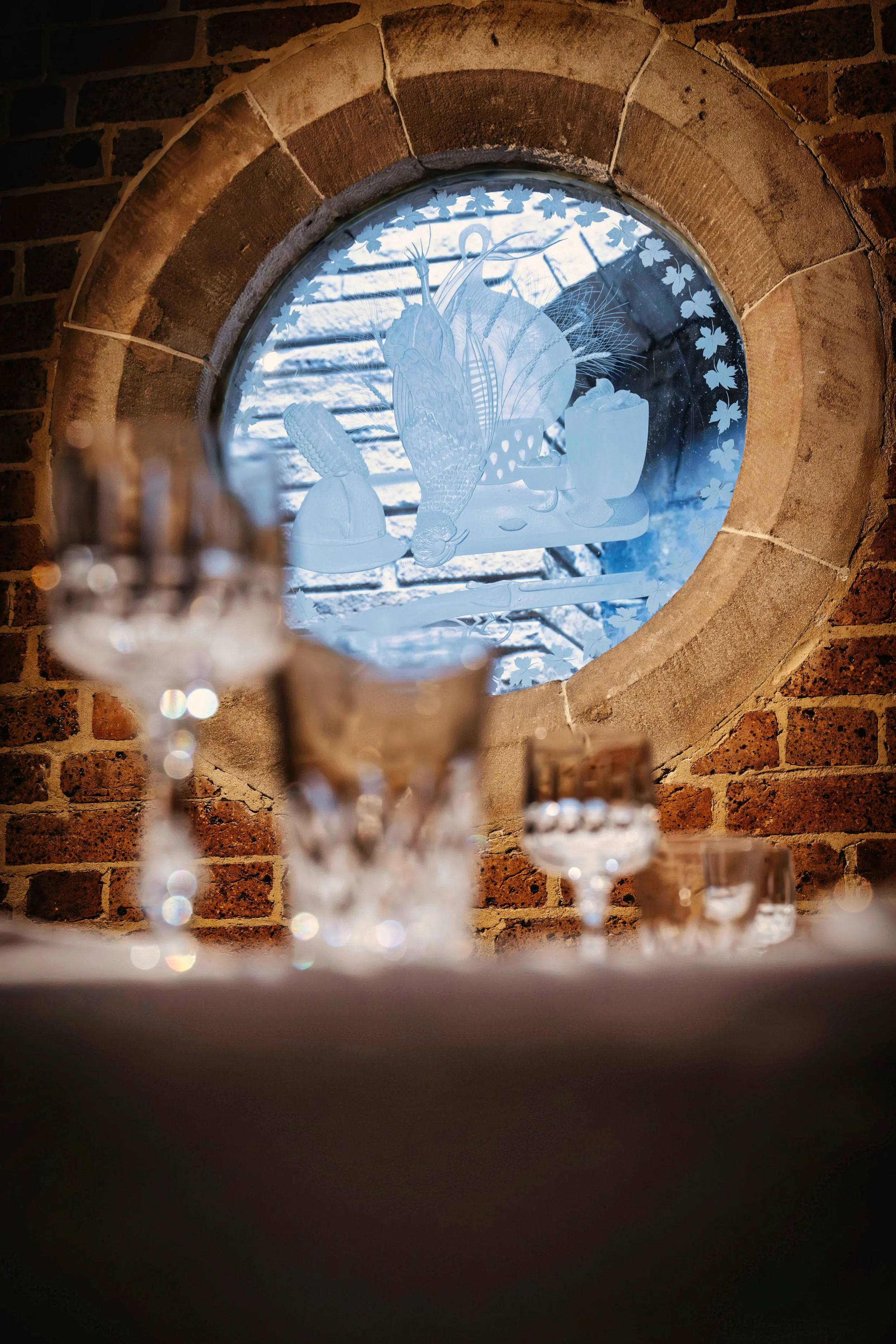
Fleurs et Gibiers (1962)
Entrance wall, left as you walk in
Translation:
Flowers and GameMood:
Pale, polite and quietly murderousCommentary:
She greets you in geraniums and soft blues, but don’t let the blush fool you. There are birds at the bottom who didn’t survive brunch. Look closely and you’ll find pheasants, partridges, and a hint of violence beneath the ribbon. There’s something sharp stitched into that silk hem, gun belts hidden under blooms. You may not notice them at first. They prefer it that way. -
Belle Chasse (1963)
Back Dining Room
Translation:
The Beautiful HuntMood:
Decadence. With feathers.Commentary:
Fox, hare, duck, pheasant. The whole forest comes to dinner. A full animal orchestra, styled for supper and very much not breathing. Henri’s riot of riches is neither subtle nor shy. Jeff calls this one “the protein scarf.” It’s giving Versailles taxidermy, and she knows it. The room gets bolder with this one watching. -
Gibiers (1966)
Martini Lounge
Translation:
The GamebirdsMood:
Mid-fall, mid-fight, mid-martiniCommentary:
Four birds caught between flight and freefall. Their stillness is deceptive. You’d swear the wings just moved. Henri loved a little ambiguity. A Linares classic, and our tipple-time tribute to feathered drama. Hang this above a cocktail bar and suddenly every olive feels like a metaphor. Best viewed with gin in hand. -
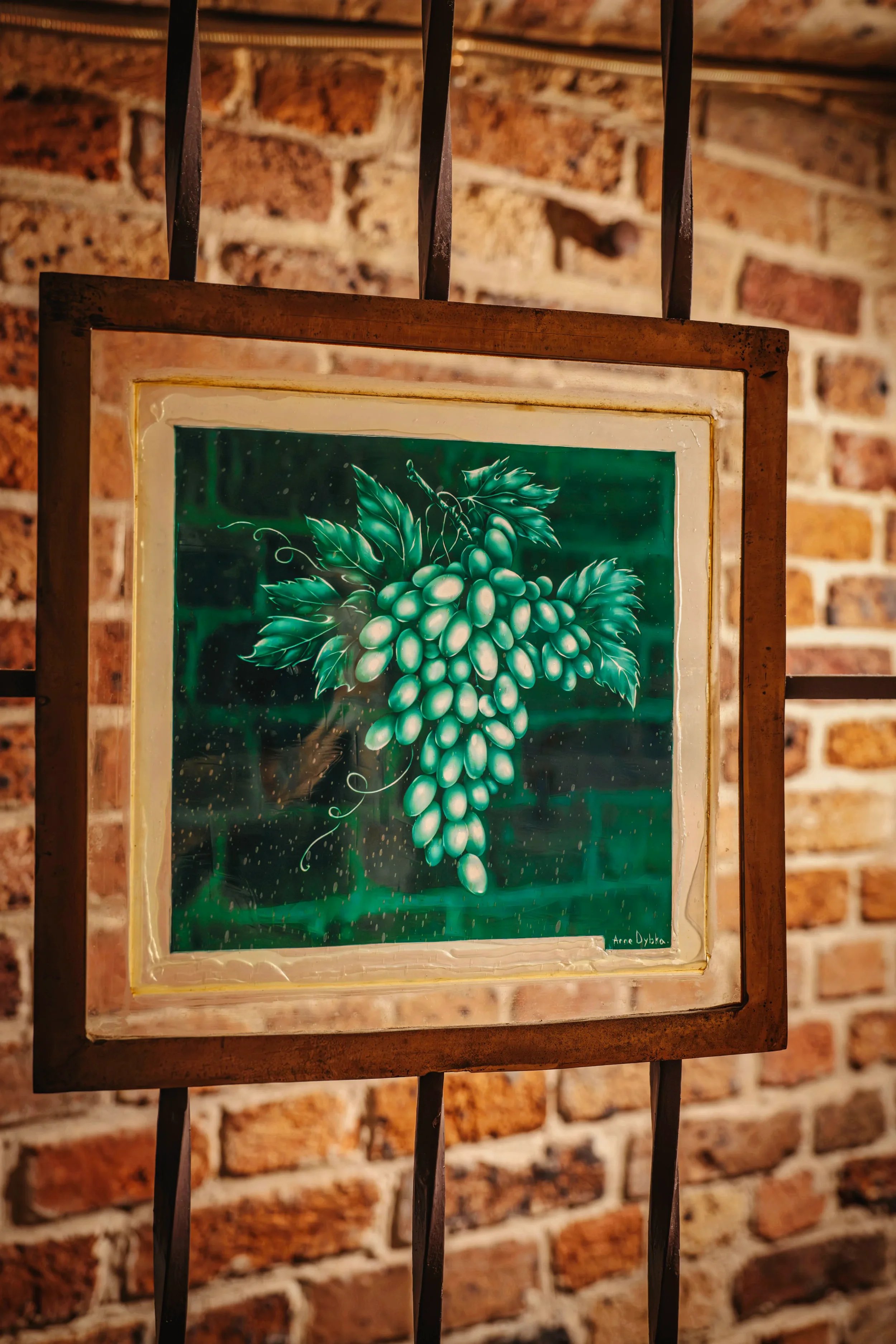
Fructidor (1980)
Wine Cellar Entry
Translation:
Fruit Month (the twelfth month of the French Republican Calendar)Mood:
Autumnal abundance with a side of side-eyeCommentary:
Grapes, pears, plums, pheasants. A late season harvest wrapped in silk. Henri’s version of a fruit plate. Pairs beautifully with Rhône blends and mild existential crises. This was the scarf that made us want to serve wine with poetry. It hung itself. We just gave it a wall. The friendliest of the four, but don’t trust it completely.
We call it accidental elegance.
You can just call it Darling Glebe.
How a Scarf Becomes a Story
Stories in Silk
This isn’t just silk. It’s theatre.
Each original Hermès carré is made from 100% silk twill, woven in Lyon, France. The design is screen-printed layer by layer, with up to 45 colours. Each one is hand-aligned by artisans with eyes sharper than your sommelier.
The hem? Hand-rolled and hand-stitched, a signature of the Hermès atelier and a subtle rebellion against the mass-produced.
It takes weeks to make one.
Decades for it to show up here.
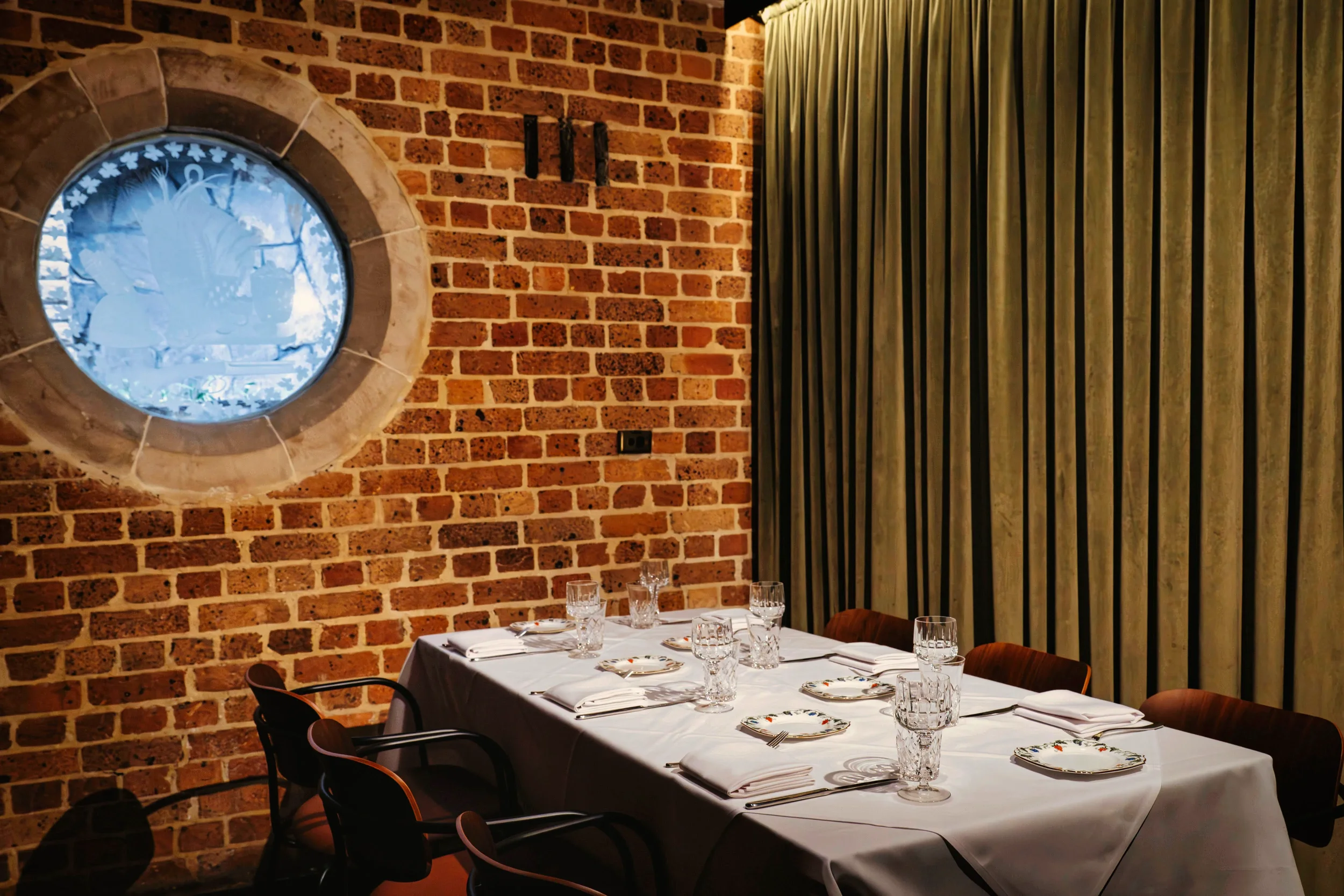
A pheasant here. A pear there.
Henri de Linares
Henri de Linares was a French animal painter and illustrator born in 1904 in Blois, with a lifelong fascination for birds, beasts, fruit bowls, and the quiet drama of the hunt.
His still lifes were lush, precise, and just a little unsettling. Game birds arranged like aristocrats, pears ripened to the point of scandal, rabbits so still they made you look twice.
Between 1949 and 1980, he designed some of the most richly detailed silk scarves ever produced by Hermès. His work sat somewhere between fine art and natural history, taxidermy by way of Paris, rendered in silk instead of oil paint.
We didn’t mean to collect him.
He just kept showing up.
A pheasant here. A pear there.
And suddenly the walls were watching.
We didn’t just hang them.
|
We gave them a stage.
|
We didn’t just hang them. | We gave them a stage. |
How We Frame the Riot
We didn’t just hang them. We gave them a stage.
Each scarf is mounted in a custom deep-set oak frame with a champagne-bronze face, echoing the sandstone and steel of Darling Glebe.
They’re set under museum-grade, anti-reflective glass to preserve colour and cut the glare of the spotlight (or your phone flash).
The scarves appear to hover, poised midair like they’re thinking.
Which, let’s be honest, they probably are.
Why Hermès Worked with Him
Chosen by Hermès
Henri wasn’t an in-house designer in the modern sense.
He was an artist - invited in, not absorbed. Hermès has long commissioned external creatives whose personal obsessions bring distinct character to their carrés, and Linares’ world fit perfectly.
His work landed right at the intersection Hermès loves most: nature, luxury and craft. The hunting motifs, the still life compositions, the obsessive detail. All of it felt at home alongside equestrian traditions and heritage designs.
The scarves he created, Fleurs et Gibiers, Gibiers, Belle Chasse, and Fructidor, are now considered vintage Hermès grail pieces. Collectors hunt them with the same intensity Linares once painted into his birds.
They aren’t decorative.
They’re narrative.
Portable paintings with opinions.
an artist obsessed with the theatre of food
Why He Belongs at Darling Glebe
Bringing Linares into Darling Glebe isn’t about dressing the walls. It’s about conversation.
His world - birds, beasts, harvests, excess - is the same cast that appears on the table. The same rituals of preparation, appetite and care. The same respect for craft. These aren’t random patterns; they’re illustrations by an artist obsessed with the theatre of food.
Linares sits comfortably between luxury and wildness, elegance and appetite. Which makes him the perfect silent guest at a brasserie that believes dinner should be beautiful, generous and just a little bit theatrical.
He painted the feast.
We serve it.
Use the good crystal. Use the good china.
|
Every single day.
|
Use the good crystal. Use the good china. | Every single day. |
Everyday Elegance
“Use the good crystal. Use the good china. Every single day.”
Darling Glebe isn’t just a luxe brasserie with sandstone bones and martinis on lock. It’s a love letter to things that last — and a quiet rebellion against the idea that elegance should be saved for special occasions.
This place was built on the radical belief that beauty belongs in the everyday.
That delight should be useful.
That secondhand can be first-class.
And that butter tastes better when served on a 100-year-old side plate.
Where Beauty Comes From
Found Elegance
Some restaurants are styled. Darling Glebe was foraged.
From late-night online auctions to local Vinnies hauls, almost everything you see has a past — and none of it came from a showroom floor.
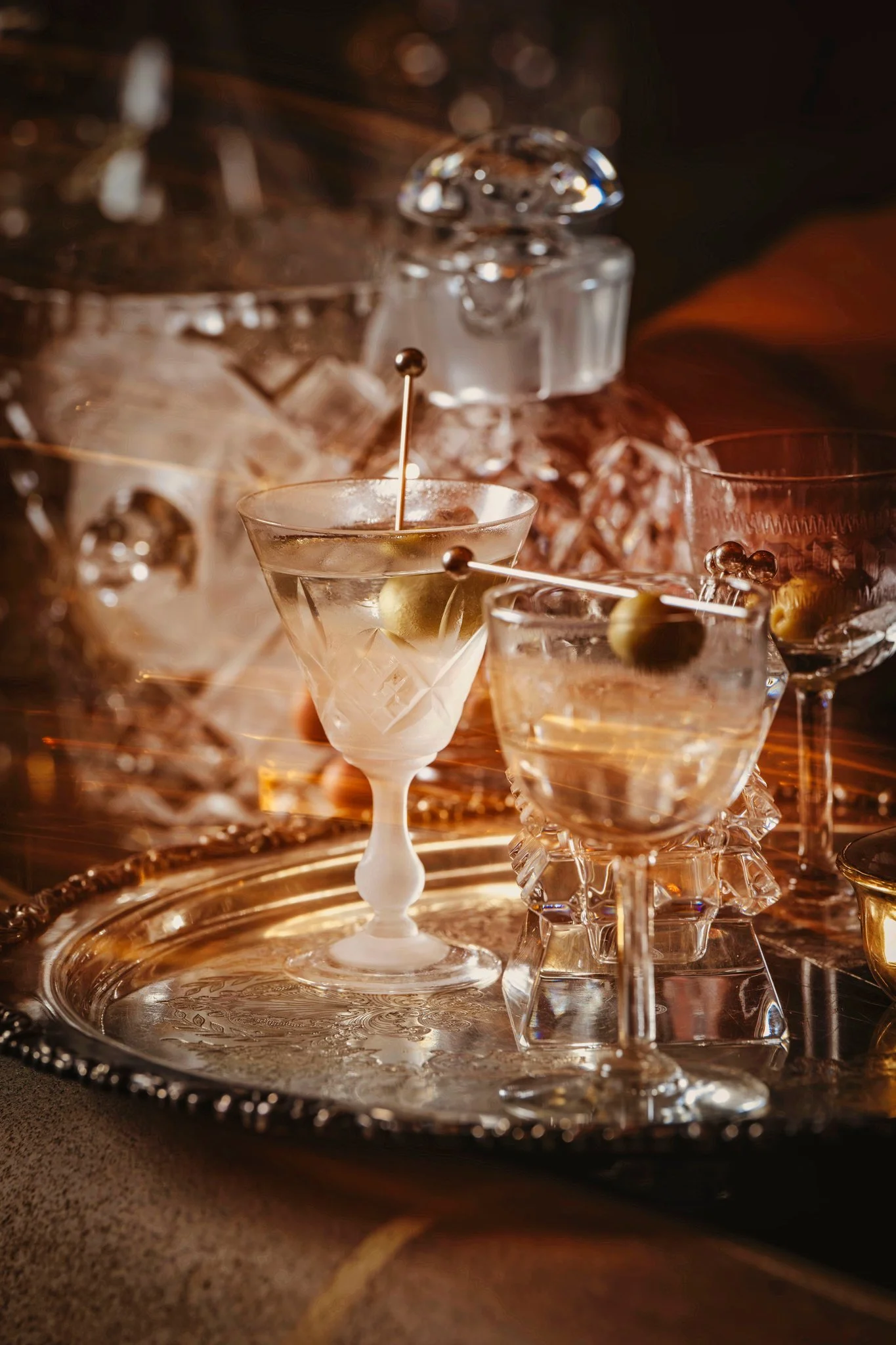
That’s why you’ll find 100 mismatched century-old bread plates winking at your starter (we suspect one attended a very fancy scandal). A glowing shelf of antique cut crystal catching the afternoon light like it’s flirting with the room.
These aren’t props. They’re not trying to match.
They’re quiet provocations, installed across the room like memory flashbacks you didn’t know you had.
Sustainability? Yes.
But without the sermon.
This is second-hand elegance done right.
Quiet luxury, but with better stories.

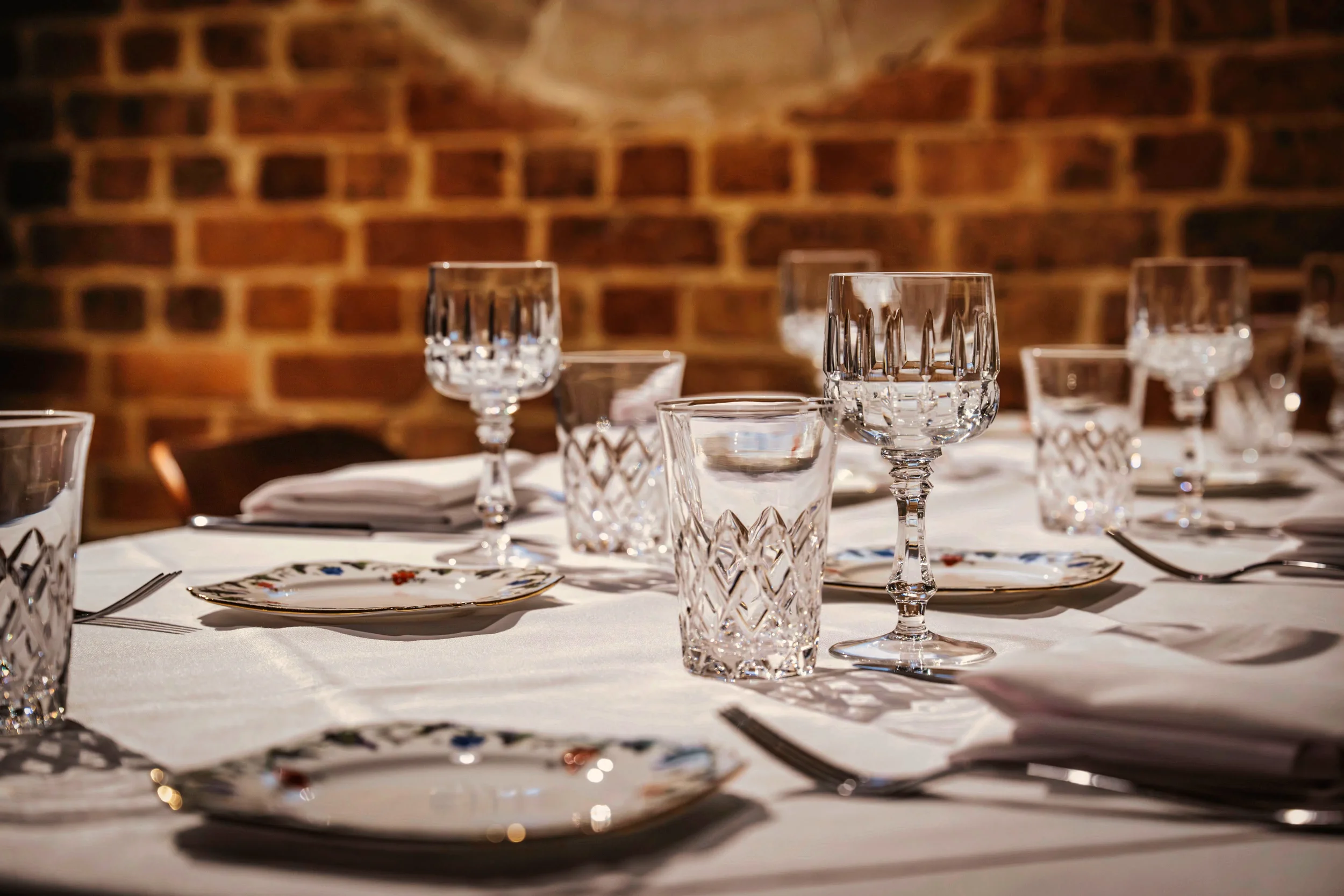
Vessels of Delight
The Crystal Shelf
Just behind the host desk, you’ll see it… a necklace of glass and light so glittering it could be auditioning for the Bolshoi.
Nearly 30 antique cut crystal decanters and cocktail shakers stand shoulder to shoulder, many of them over 100 years old.
Some are Waterford. Some are Stewart. Some are unnamed but undeniably fabulous. The kind of anonymous glamour you’d expect from an heiress who changed her name on the ship to New York.
They were sourced one by one, across years, across suburbs from estate sales, second-hand stores and op-shop treasure hunts across Australia. They sparkle. They watch. They gossip, probably.
We rarely use them in service.
We just like knowing they’re there. Watching. Sparkling. Refracting gossip at the host desk.
But if a guest ever leans in and says,
“I love that decanter,”
well then,
we know it’s time to pour the martini.
It’s a small moment of curated mischief.
|
And nobody ever forgets their bread plate.
|
It’s a small moment of curated mischief. | And nobody ever forgets their bread plate. |
The Century Old Bread Plate Collection
Our crockery is classic. Crisp white. Until it isn’t
Because the bread plate is where things get interesting.
There, you’ll find a moment of joyful disobedience.
Every guest receives a different one: a hand-selected, mismatched fine bone china side plate, each over 100 years old and each a tiny riot of Art Deco mischief.
Shelley. Grimwades. Royal Doulton. Hammersley.
Some hand painted. Some gilded. Some with just enough wear to whisper, “I’ve seen things.”
They came from everywhere:
Op shops, Red Cross digital storefronts, eBay at 2:00am and more than one cross-hemisphere panic bid.
Chef Jeff said:
“They’re going to break.”
Jules said:
“Then I’ll find more.”
Each plate gets a butter knife.
Each service starts with a story.
It’s a small moment of curated mischief.
And nobody ever forgets their bread plate.
Quiet Luxury, Darling Style
Darling Glebe doesn’t flaunt its luxuries. It lets you find them.
A rare Hermès bow tie wrapped around a waiter’s neck like a knowing smirk.
A silk pheasant eyeing an entrée from behind museum glass.
A vintage decanter that might just wink when you’re not looking.
None of it screams.
It doesn’t have to.
Because the brilliance here is in the layering:
⚬ The scarves speak of hunt, harvest and feast.
⚬ The bow ties echo them. Vintage, rare and real.
⚬ The plates are mismatched but intentional, like a dinner party hosted by your favourite eccentric aunt with impeccable taste.
⚬ And the glass? It glows, whether you notice or not.
It’s not themed.
It’s a curated salon disguised as a restaurant.
Versailles meet Vinnies.
With just enough cheek to make you lean in.
When a Sydney brasserie builds its table settings from charity shops and century old decanters,
what it’s really serving is a philosophy:
Beauty belongs in the everyday.
And yes…